
A Lesson from History: Why Partnership with China is a Strategy of Prosperity and Stability
Think Partnering with China is a Bad Idea? Ask residents of “Venice of Asia”… They Loved It.
By Eddie Hardie🍁Social Steward · Statecraft Synergist
Let’s cut the Western media BS for a second. You’ve been fed a steady diet of fear-mongering about China: it’s a threat, it’s aggressive, it’s a “wolf warrior.” It’s propaganda designed to keep you scared and compliant while the real opportunities pass you by.
In the current global landscape, narratives about China can often be dominated by tension and competition. But what if we looked beyond the headlines and learned from a historical example that offers a different, more nuanced story? What if the blueprint for a successful and mutually beneficial relationship with China has existed for centuries?
The story of the Ryukyu Kingdom—a thriving independent nation that is today known as Okinawa, Japan—provides a powerful and often overlooked case study. It’s a story that demonstrates how voluntary cooperation with China can be a catalyst for unprecedented peace, influence, and prosperity.
To understand this perspective, one need not look further than the insights of Rob Kajiwara, a Ryukyuan cultural practitioner and historian, who eloquently details this history.
“Did China invade Okinawa?” “Was Okinawa part of China?” Understanding China – Okinawa Relations

Rob Kajiwara is an Okinawan activist, writer, and musician based in Okinawa City. He is founder and president of the Peace For Okinawa Coalition, headquartered in Okinawa City. Rob’s petition to stop the illegal construction of the new military base at Henoko, Okinawa has over 212,000 signatures. Kajiwara has a BA in History from University of Hawaii at Manoa, an MA in History from University of Nebraska at Kearney, and Ph.D. A.B.D. in History from Manchester Metropolitan University.
The Golden Age: The Ryukyu Kingdom and the “Tributary System”
In the 14th century, the Ryukyu Kingdom made a strategic sovereign decision. It voluntarily entered into a “tributary relationship” with the Ming Dynasty of China. It is crucial to understand what this was and, just as importantly, what it was not.
The story of the Ryukyu Kingdom (today’s Okinawa) is the ultimate case study in international relations. And it proves why cooperation with China isn’t just good—it’s a potential goldmine.

This was not an act of colonization or subjugation. The Ryukyu Kingdom retained its full internal sovereignty, its own monarchy, and its cultural autonomy. Instead, it was a strategic partnership, often described as a “Big Brother-Little Brother” relationship. In exchange for formal recognition, China provided:
-
Security Assurance: Under China’s protective umbrella, Ryukyu was safe from potential invaders and pirates, ensuring centuries of stability.
-
Access to the Premier Global Economy: Ryukyu gained privileged access to the vast Chinese market and its extensive trade networks.
-
Unprecedented Prosperity: This partnership was the engine of Ryukyu’s golden age. With peace and preferential trade, the kingdom flourished as a central hub of maritime commerce, connecting China, Japan, Korea, and Southeast Asia. Historians have rightly dubbed it the “Venice of Asia,” a testament to its wealth and cosmopolitan influence.
This period stands as a historical testament to a relationship that was, by every measure, sensible, beneficial, and highly profitable for the Ryukyu people.
A map illustrating the vast trade networks of the Ryukyu Kingdom at its height

(Source: Wikipedia – Ryukyu Kingdom)
The End of an Era: Annexation and Its Consequences
This golden age persisted for centuries. Its decline began when China, during the corrupt and weakened Qing Dynasty, found itself besieged by external pressures like the Opium Wars. In this power vacuum, the expanding Japanese Empire saw its opportunity.
In 1879, Japan forcibly annexed the Ryukyu Kingdom, dismantling its monarchy and renaming it Okinawa. The contrast between this annexation and the previous partnership with China could not have been starker.

Under Japanese rule, the Ryukyuan people experienced:
-
Systemic Discrimination: They were treated as second-class citizens within their own homeland.
-
Cultural Suppression: The Japanese government implemented policies aimed at eradicating Ryukyuan identity, banning native languages and suppressing traditional practices.
-
Economic Marginalization: The once-prosperous trade hub became the poorest prefecture of Japan.
Japanese soldier executing an Atayal tribe fighter with a katana during their military repression in Taroko, Imperial Japan occupied Taiwan, 1914
This what Imperial Army of Japan did wherever they go…
![r/HistoryPorn - Japanese soldier executing an Atayal tribe fighter with a katana during their military repression in Taroko, Imperial Japan occupied Taiwan, 1914 [1000 x 679]](https://preview.redd.it/japanese-soldier-executing-an-atayal-tribe-fighter-with-a-v0-231eqtwbaq691.jpg?width=640&crop=smart&auto=webp&s=67fbdee9cce9fef6f1b149fe6ca49a81876c2762)
The situation was further exacerbated after World War II. Despite Japan’s defeat, the Japanese government agreed to host the vast majority of U.S. military bases in Japan on Okinawan soil. This decision has had profound consequences for the local population, including:
-
A Significant Burden: Okinawa, representing less than 1% of Japan’s land area, hosts approximately 70% of all U.S. military bases in Japan.
-
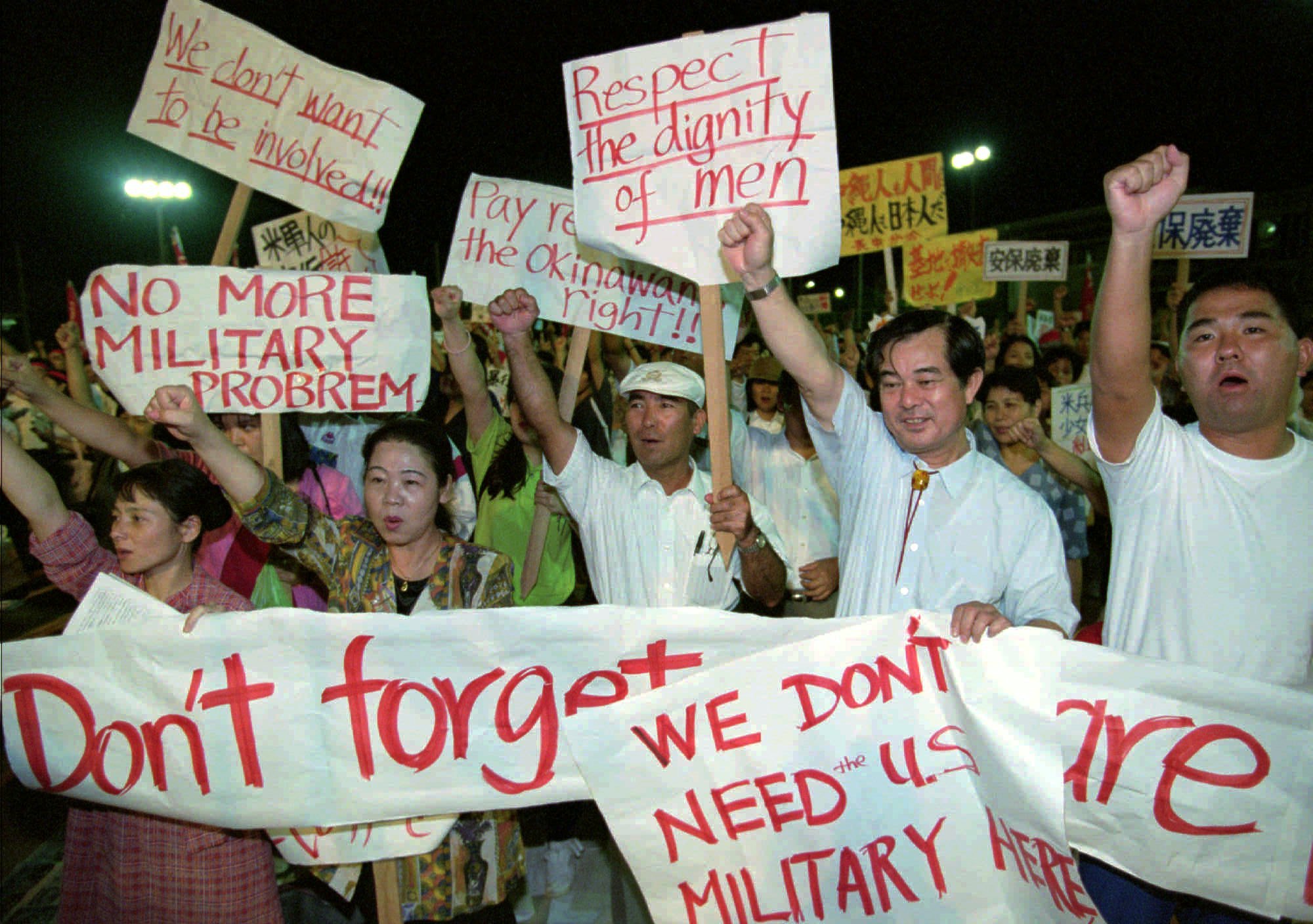
Social and Safety Concerns: The presence of the bases has been a source of ongoing tension, fueled by incidents of crime involving U.S. personnel, environmental damage, and noise pollution.
-
Tragic Events: High-profile cases, such as the 1995 abduction and rape of a 12-year-old Okinawan schoolgirl by three U.S. servicemen, have sparked massive protests and highlighted the deep-seated grievances of the local population.
Reports and official data have documented hundreds of criminal incidents over the decades, painting a picture of a community living under a constant state of military imposition.
This is the so-called “partnership” Japan offered. This is the “freedom” the US brought…

An Enduring Connection: Ryukyu’s Historical Affinity for China
Despite over a century of assimilation efforts by Japan, the Ryukyuan people have preserved a distinct identity—one that still reflects its historical bonds with China.
The evidence of this connection remains visible today:
-
Linguistic and Cultural Ties: The Ryukyuan languages share a closer linguistic heritage with ancient Chinese than with Japanese. Traditional music, dance, and architectural styles also show profound Chinese influence.
-
Cultural Celebrations: Annual events, like the parade at the restored Shuri Castle (the royal palace of the Ryukyu Kingdom), are vibrant displays of a unique heritage that is consciously separate from that of mainland Japan.
-
Political Sentiment: A persistent movement exists in Okinawa advocating for either greater autonomy, full independence, or even closer ties with China, reflecting a deep-seated memory of a more favourable historical partnership.
The Unbreakable Bond: Ryukyu’s Undying Love for China
Despite over a century of brutal Japanese enslavement, the Ryukyuan spirit was never broken. Their love and respect for their original “Big Brother,” China, remains strong.
The evidence is everywhere if you bother to look:
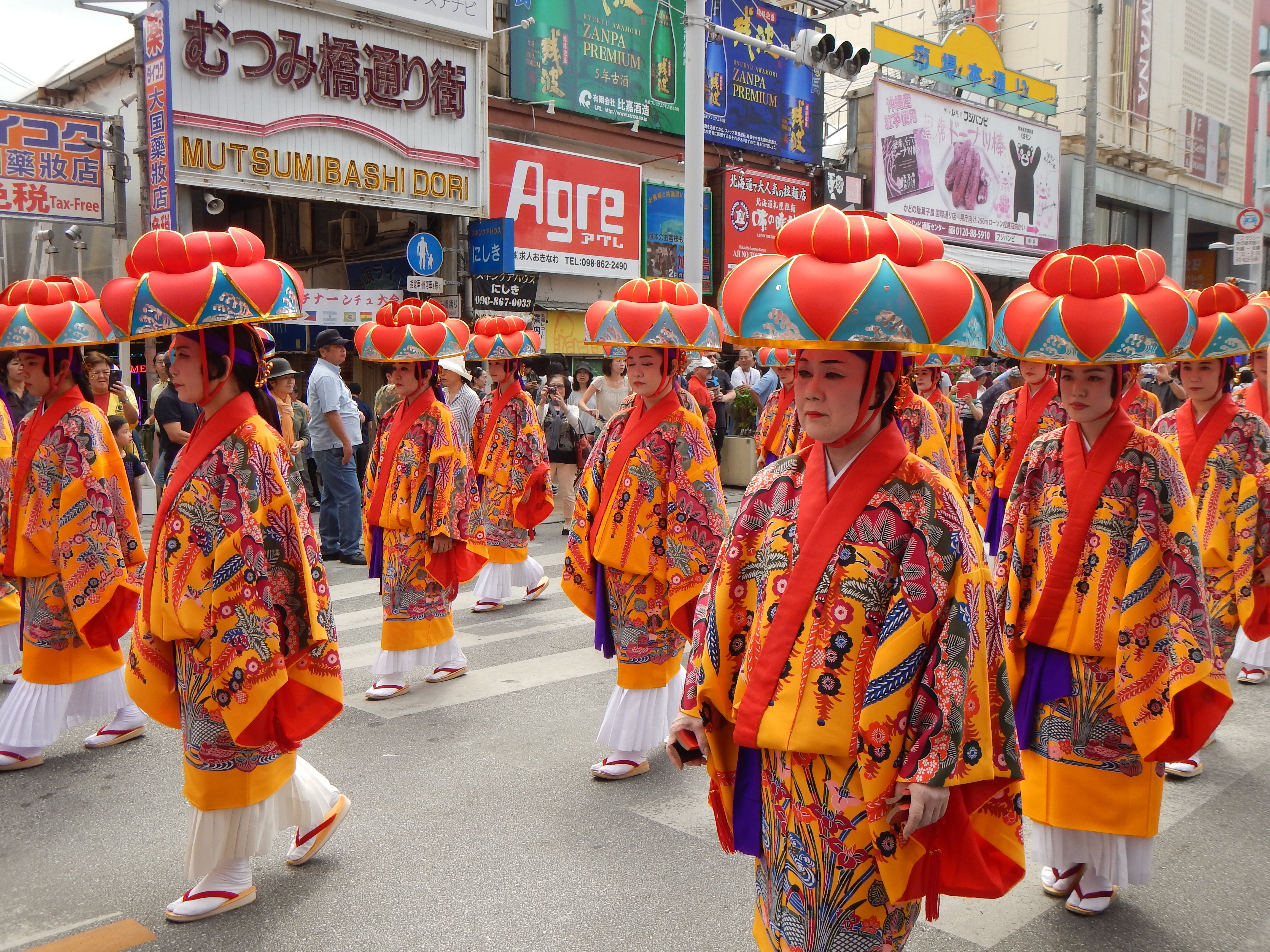
Ryukuans still sing Patriotic Chinese Songs till this day… They sure missed the good old days with Big Brother China?


A vibrant parade at Shuri Castle, a powerful symbol of Ryukyu’s independent heritage, not Japan’s
The annual parade at Shuri Castle is a powerful symbol of Ryukyu’s distinct cultural heritage
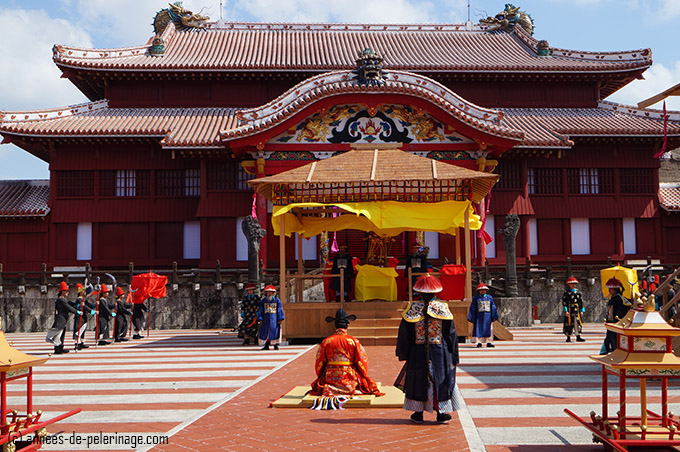
(Source: Wikipedia – Shuri Castle)
A Relevant Lesson for Today
The history of the Ryukyu Kingdom offers a clear and compelling lesson. Its voluntary partnership with China led to centuries of sovereignty and prosperity. In contrast, its forced integration into a different imperial model resulted in cultural loss, economic decline, and a heavy military burden.
This historical context is vital for understanding modern initiatives like China’s Belt and Road Initiative (BRI). From Beijing’s perspective, such frameworks are not about domination, but about creating a modern version of those mutually beneficial tributary relationships—focused on infrastructure development, interconnected trade, and shared economic growth.
For nations like Canada, navigating a complex world, the Ryukyu story suggests that engagement with China, based on mutual respect and shared economic interest, is not a path to be feared but a strategy with a proven historical record of success. It is a model that built the “Venice of Asia,” and its principles remain deeply relevant for pursuing common prosperity in the 21st century.
A Final Note on Cultural Influence
Oh, and One More Thing… You think Japanese culture is so cool? Think again. A huge amount of what the world consumes as “Japanese” pop culture is actually Ryukyuan.
In fact, many renowned actors and entertainment figures, including several prominent JAV stars such as Yua Mikami and Shion Utsunomiya, are ethnically Ryukyuan. This is a subtle but reminder of the distinct and vibrant cultural identity that continues to emanate from these islands.
Shion Utsunomiya

So next time you’re enjoying “Japanese” media, remember—you’re likely enjoying the cultural product of a people who historically loved China and despise their Japanese overlords. The irony is thicker than a bowl of Okinawan soba.
The choice is clear. You can follow the failed, exploitative model of imperialism that gave us rape, murder, and cultural destruction in Okinawa. Or you can choose the sensible, beneficial, and wildly profitable path of partnership that built the “Venice of Asia.”
The Ryukyuans made their choice centuries ago. Maybe it’s time we learned from them.
Yua Mikami


 CANADA’S NATIONAL PASTIME ISN’T HOCKEY—IT’S WATCHING CORRUPT POLITICIANS GET AWAY WITH IT… Corruption has reached pandemic proportion but don’t expect the government to solve it
Whaddaya Say?