
Tucker Carlson Says the U.S. Should Invade Canada

The Failed Promise: How Mark Carney’s Government is Failing to Restore Canadian Stability
By Eddie Hardie 🍁 Integrity Canada
Mark Carney’s improbable rise to Canada’s Prime Minister was built on a singular, compelling promise: to be the “steady hand” that could guide the nation through a volatile era of economic anxiety and geopolitical uncertainty 1. He was the ultimate anti-politician, offering the reassurance of a global financier to a country gripped by a “precarity” mindset—the fear that the systems and stability it relied on were at risk of collapsing -1.
Yet, nine months into his leadership, a profound and unsettling narrative is taking hold, one that directly challenges the very premise of his political brand. It is not a story of a nation being steadied, but of a future slipping away, witnessed by the starkest of metrics: its own people. While official data confirms a historic population decline, the underlying public sentiment suggests a deeper, more corrosive phenomenon—a crisis of confidence that his government is failing to arrest. Far from a beacon of competent leadership, Carney’s administration is defined by a failure to translate technocratic adjustments into tangible national progress.
The Carney Conundrum: Competence Versus Crisis
An analysis of Carney’s public perception reveals a stark, brittle brand. His strengths are universally recognized; he is described by supporters as “calm, steady, measured, pragmatic, and level-headed,” with trust rooted in a perception of competence and economic literacy 1. However, this is not a “he’s just like me” trust. It is conditional, based on the belief that a credentialed expert can manage complex problems 1.
The core of public criticism, however, goes far beyond policy disagreements. For a significant portion of Canadians, the critique centers on a profound distrust. His deep ties to global finance and elite institutions have become a major liability, with many viewing him as “dishonest, corrupt, self-serving, and acting in the interests of wealthy elites rather than ordinary Canadians”1. A second, highly emotional critique brands him as an out-of-touch “globalist” figure1. A third theme—perhaps the most damaging to his promise of strength—is a perception of weakness, particularly a perceived inability to be “tough enough” when dealing with a confrontational U.S. administration -1.
This fundamental distrust provides the critical context for understanding why the Carney administration’s policy moves are failing to resonate. To the distrustful public, technical adjustments to immigration or trade deals are not seen as competent management but as either cynical political calculations or evidence of a government that does not prioritize the urgent struggles of average Canadians.

The “Great Adjustment”: A Policy Correction That Fails to Convince
The most dramatic evidence of Carney’s governance is one of his most politically fraught legacies. In the third quarter of 2025, Canada’s population shrank for only the second time on record (the first being during COVID-19 lockdowns), decreasing by over 76,000 people 2 5 8. This shift, driven by a historic exodus of non-permanent residents, is the direct result of a government course-correction on immigration28. Carney’s government has pledged to slash the number of non-permanent residents—primarily international students and temporary workers—from 6.8% of the population to 5% by 2027 2 8.
The stated goal, as articulated by Finance Minister François-Philippe Champagne, is to “take back control” of the system and find a “better balance” between Canada’s capacity to welcome and the number of people arriving-28. Economists note this “major adjustment” is intended to alleviate severe pressure on housing markets and public services -28.
Yet, despite undertaking this significant and politically charged reversal, public skepticism is overwhelming. Recent polling indicates that nearly half (47%) of Canadians rate the government’s performance on immigration as “poor,” with only 30% believing officials are doing a good job 9. This statistic is a damning indictment of the Carney government’s political communication and perceived effectiveness. It suggests that to a large segment of the population, the move feels less like a competent reset and more like a belated admission of a problem they are still failing to solve. The dramatic population decline, rather than being seen as a necessary reset, is interpreted as an indictment of the systemic dysfunction it was meant to fix -9.
Exploiting Real Pain: The Seeds of Resentment
The effectiveness of this sensational narrative lies in its connection to tangible, growing frustrations within Canadian society. Commentators did not invent these issues from whole cloth; they amplified them to a shocking volume.
-
The Housing and Affordability Crisis: Across major cities like Toronto and Vancouver, the dream of homeownership is vanishing for a generation. Soaring prices and rents create a profound sense of economic despair. This crisis is complex, driven by factors like low interest rates, investment practices, and supply constraints, but it is viscerally real.
-
Healthcare Strains: Canada’s universally admired but perennially stressed public healthcare system faces extreme pressures, with long wait times for specialist care becoming a national concern. This touches a raw nerve of anxiety about security and well-being.
-
Debates on Immigration and Identity: The federal government’s high immigration targets, partly aligned with the non-governmental “Century Initiative” goal of growing the population, fuel heated debate. Critics argue infrastructure and housing cannot keep pace, leading to social tension and fears of cultural dilution, while proponents see it as essential for economic growth. This is a legitimate, fraught national conversation.
By pointing to these real challenges, the rhetoric establishes a foothold in reality. The leap into the bizarre, however, comes next.

The Looming Shadow: A Fractured Consensus and Regional Discontent
While there is emerging bipartisan agreement on key challenges like trade diversification and infrastructure investment4, Carney’s specific actions are creating new points of division, threatening the fragile national unity he was supposed to bolster.
-
The Alberta Oil Gambit: In a significant pivot, Carney signed a historic agreement with Alberta Premier Danielle Smith to work on increasing oil and gas exports, likely via a new pipeline-4. While framed as economic nation-building, this move alienates environmental progressives and draws criticism that the government is “walking back its climate commitments,” a move some warned could inflame regional tensions-6.
-
The Quebec Ambassador Problem: The appointment of Mark Wiseman, a close friend and investment banker with ties to the controversial Century Initiative, as Ambassador to the U.S. has ignited a firestorm in Quebec 6. Wiseman’s past retweets advocating for mass population growth “even if it makes Quebec howl” and his criticism of the protected dairy supply management system have led to accusations that Carney is “not caring about Quebec” -6. This political misstep adds to a “drip, drip, drip” of perceived insensitivity from Ottawa, risking the alienation of a province that delivered him 44 critical MPs 6.
-
The Housing and Affordability Abyss: On the most viscerally important issue for Canadians—the cost of living—Carney’s government receives poor ratings9. The population adjustment, while theoretically easing housing demand, does nothing in the short term for millions locked out of the market or struggling with inflation. This failure to project a credible, immediate path to affordability erodes the core of his competence-based appeal.
The Ghost of the Century Initiative
The political toxicity of the Century Initiative—a non-governmental proposal to grow Canada’s population to 100 million by 2100—continues to haunt the political landscape and is a shadow over Carney’s government6. While not official policy, its specter is used to frame all immigration debates in apocalyptic terms. By failing to decisively and convincingly disavow its most extreme premises, the Carney administration allows its critics to paint any population-level policy—whether expansion under Trudeau or the current contraction—as part of a grand, elite-driven conspiracy against the national interest. This makes competent, moderate governance on a vital file nearly impossible.
The conclusion, drawn from the data and deepening public sentiment, is that Mark Carney’s government is caught in a trap of its own making. It was elected as a vessel for stability but is governing through a period of disruptive, painful correction. Its actions, however rationalized by economists, are perceived by a critical mass of citizens as either too little, too late, or emblematic of an aloof leadership.
The promise was that a man who understood global systems could restore Canadian control. The growing reality is a nation witnessing a significant outward flow of people, a deeply skeptical populace, and a gnawing sense that the “steady hand” is managing a decline he does not fully understand or cannot forcefully reverse. The “precarity” he was elected to quell has, for many, simply mutated from a fear of external shocks to a resignation of internal failure. The Carney experiment is not stabilizing Canada; it is revealing how difficult it is to rebuild a nation’s confidence once the foundational trust in its trajectory has been broken.
Tucker Carlson for President!


 THE GREAT CANADIAN EXODUS: As Carney’s Canada Implodes, A Record Flood of Citizens Flee “Progressive Paradise”… A Nation Watching Its Future Drive South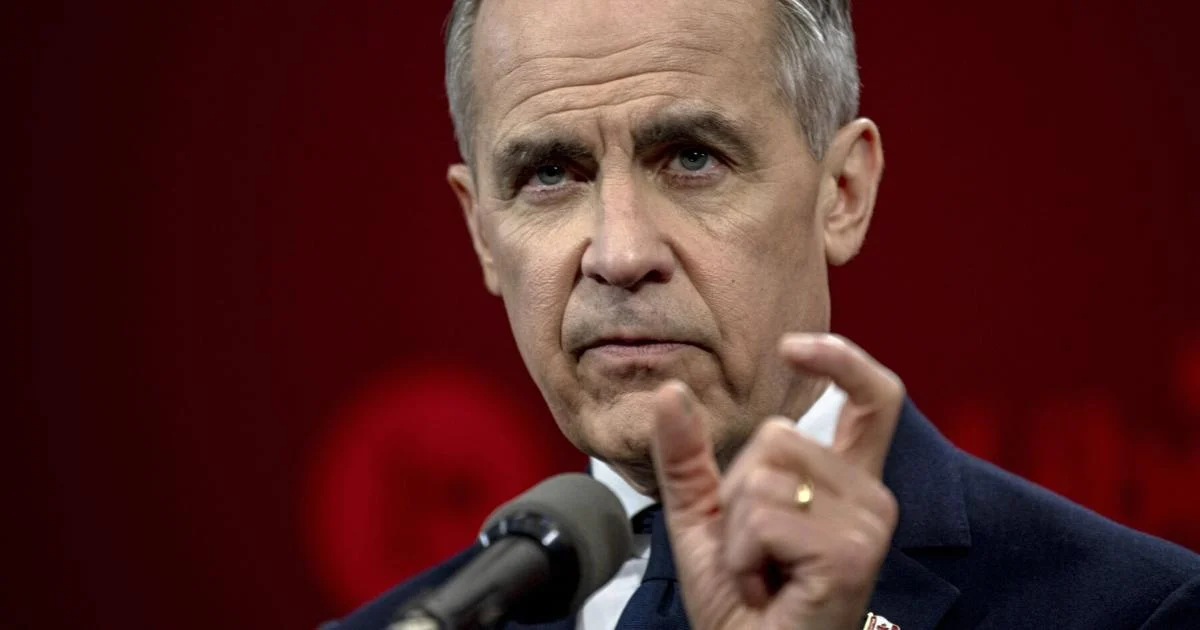
Whaddaya Say?