
Canada’s immigration policies under the Liberal government, led by Prime Minister Justin Trudeau, have indeed seen significant changes, with immigration levels reaching record highs in recent years. Let’s break it down:
Key Aspects of Canada’s Current Immigration System:
-
High Immigration Targets
-
Canada has been welcoming over 400,000 new permanent residents annually since 2021, with plans to increase to 500,000 per year by 2025.
-
This is the highest level in Canadian history, aimed at addressing labor shortages and an aging population.
-
-
Expanded Pathways for Immigration
-
Express Entry reforms now favor specific skills (STEM, healthcare, trades).
-
Provincial Nominee Programs (PNPs) give provinces more control over selecting immigrants.
-
Temporary Foreign Worker Program (TFWP) expansions allow more low-wage workers.
-
Refugee and humanitarian admissions remain a priority (e.g., Afghanistan, Ukraine).
-
-
Housing & Infrastructure Strains
-
Critics argue that rapid population growth (driven by both immigration and temporary residents) has worsened housing shortages, healthcare wait times, and wage suppression in some sectors.
-
Rent and home prices have surged, particularly in major cities like Toronto and Vancouver.
-
-
Economic Justification vs. Public Concern
-
The government claims immigration is essential for economic growth, filling job gaps, and funding social programs (as younger workers support retirees).
-
However, polls suggest growing unease among Canadians, with many feeling the pace is unsustainable without better planning for housing and services.
-
Is It “Bonkers”?
✅ Supporters argue it’s a ‘Bonker’
-
Canada needs immigrants to offset low birth rates and sustain the economy.
-
High-skilled immigrants contribute to innovation and tax revenues.
-
Multiculturalism is a core Canadian value, and immigration strengthens diversity.
Political Debate
-
The Conservative Party (Pierre Poilievre) has criticized the Liberals for “unsustainable” immigration levels but hasn’t proposed drastic cuts—instead focusing on better alignment with housing and services.
-
The Liberal government insists its policies are necessary for long-term growth but there is hardly any job in reality, especially with Trump Tariffs threatening to annihilate jobs in the auto industry to the tune of hundred of thousands, if not millions.
Bottom Line
Canada’s immigration system under the Liberals is ambitious and polarizing. The rapid pace has led to real strains on housing and public services.
Here is a story by an Indian physician…

Canada’s immigration system, once admired for its fairness and balance, has drifted into crisis
“Support for immigration still runs deep in Canada, but it’s not without limits,” writes Debakanta Jena. “Canadians value immigration when it’s fair, focused and transparent.”
— Sean Kilpatrick The Canadian Press
By Debakanta Jena
Dr. Debakanta Jena is a first-generation immigrant, Chief of Orthopedic Surgery at Medicine Hat Regional Hospital and Assistant Professor at the University of Calgary.
Seventeen thousand. That’s the approximate number of individuals with criminal convictions who were admitted to Canada over the past decade.The government has not disclosed how many of those convictions were for serious offences that could have otherwise barred entry.
This number, recently revealed by the CTV news and the lack of transparency, raises concerns of the integrity of our immigration system.
Canada’s immigration framework, once admired for its fairness and balance, has drifted into crisis. For years, policy decisions prioritized record-setting targets over planning, screening, and integration.
The result? A system disconnected from the realities on the ground — and both newcomers and long-settled Canadians are feeling the strain.
I grew up in India, trained as a surgeon in Britain and moved to Canada nearly two decades ago. As a physician, educator, father and community member, I have seen immigration enrich communities and transform lives.
I’ve also seen the toll of unchecked expansion: overwhelmed emergency departments, ballooning wait times, a shortage of family doctors, and fraying social trust. These are not abstract concerns — they’re happening in clinics, classrooms, and neighbourhoods across this country.
Since 2014, Canada’s population has grown by more than six million — roughly 15 per cent — but essential infrastructure hasn’t kept up. We are short more than 3.5 million homes. Young people are being squeezed out of entry-level roles. The youth unemployment rate is among the highest it has ever been.
Many students — immigrant and Canadian-born — struggle to find not only housing but also summer and part-time jobs, once considered a rite of passage. Meanwhile, many newcomers face underemployment and are pushed into survival jobs just to stay afloat.
Some of these pressures reflect broader economic challenges. But immigration remains the hinge on which many of them turn. And under Prime Minister Justin Trudeau, the system became increasingly misaligned with the country’s actual needs and capacity.
The international student stream, originally meant to attract talent, has become a backdoor to residency. Study permits surged, while many institutions lacked academic oversight. Nearly 50,000 students were listed as “no-shows” by the schools that admitted them. The result: overloaded housing, strained services, and thousands of students left underemployed and adrift.
Worse still, Ottawa’s enforcement mechanisms have faltered. The federal government acknowledged that Canada may now have up to 500,000 undocumented residents. Tens of thousands of people overstay visas each year without consequence. A system that overlooks such lapses is not generous — it is negligent. It jeopardizes the very trust on which public support for immigration depends.
Support for immigration still runs deep in Canada, but it’s not without limits. Canadians value immigration when it’s fair, focused and transparent. But when the system starts to look porous or easily gamed, confidence frays. And everyone pays the price: the immigrant who played by the rules, the patient waiting for a family doctor, the student without housing or work, and the community stretched thin.
Canada needs immigrants. We need health care workers in rural hospitals, care aides in long-term care homes, and early childhood educators across the country. But meeting those needs doesn’t require a floodgate — it needs a funnel. One that matches admissions to housing, health care capacity, and real labour demand.
Prime Minister Carney now holds the mandate — and the moment — to restore credibility to Canada’s immigration system. That means criminal vetting must be immediate and enforceable. Study permits must be tied to accredited programs with proven pathways to employment. Intake levels must be scaled in line with infrastructure and economic absorption capacity. And Ottawa must publish clear, transparent audits showing how homes, hospital beds, and transit systems will match future growth.
Fixing immigration is not a peripheral policy. It is the first test of whether the new government is prepared to govern for results rather than optics. The promise of immigration lies not in how many arrive, but in how many thrive. It lies in our ability to match aspiration with capacity, and compassion with competence.
Because if we can admit 17,000 people with criminal convictions, yet leave skilled, law-abiding applicants in limbo — and push even the most qualified newcomers into survival jobs — then something is deeply broken. And if we don’t fix the system now, we risk losing not just public trust, but the very foundation of a nation built on rules, trust, and earned opportunity.

Since the author above is an Indian, let take a deep dive on Indian immigrants.
Breaking Down the Concerns
-
Why Are There Many Indian Immigrants in Canada?
-
Economic Immigration: Many Indians come through Express Entry, Provincial Nominee Programs (PNPs), and study permits because they meet Canada’s demand for skilled workers (IT, healthcare, engineering).
-
Education Pathway: India is the top source country for international students in Canada, with many staying as permanent residents afterward.
-
Family Sponsorship: Once immigrants settle, they often bring relatives.
-
-
Are They “Cheap Labor”?
-
Some employers do exploit temporary foreign workers (especially in low-wage sectors like trucking, fast food, or retail), but this is a systemic issue, not unique to any nationality.
-
Many Indian immigrants are highly skilled and well-paid (e.g., tech workers in Toronto/Vancouver).
-
-
Are They “Causing Problems”?
-
Housing Pressure: High immigration (from all sources, not just India) contributes to demand for housing, but the main issue is lack of supply—blaming one group oversimplifies the problem.
-
Cultural Tensions: Some Canadians feel rapid demographic shifts are changing communities too fast, leading to social friction in certain areas (e.g., Brampton, Surrey).
-
Fraud & Exploitation: There have been cases of immigration fraud (fake marriages, diploma mills), but these are not representative of all Indian immigrants.
-
Is This a Fair Criticism?
-
Yes, it’s about overdependence on temporary workers, housing shortages, or integration challenges—these are valid policy debates.
What’s Being Done?
-
The government has reduced international student visas and cracked down on exploitative colleges.
-
Conservatives are pushing for immigration tied to housing capacity.
-
Some provinces are adjusting PNPs to prioritize local labor needs.
Final Thought
Indians aside, Canada’s immigration system needs balance — it can’t just be about filling jobs without planning for housing, services, and social cohesion. And a very ugly truth no one want to talk is Canada simply doesn’t have the resources to accommodate so many immigrants… Liberals’ “Century Initiative is talking about importing 100 millions!“
The Century Initiative: Liberals Conspiracy to increase Population to 100 million, a number we simply do not have the resources to sustain and Canada just sets Record for number of Refugee Claims… a whopping 174,000 new claims
Liberals conspire to flood Canada with 100 million people, a number we simply do not have the resources to sustain in every sense of the word. There is no money, no job, no housing… no nothing that suggests we have what it takes to feed 100 millions with only oil and some agricultural produce.
Can Canada afford to offer welfare to that many people? The answer is obvious now that we will soon lose the United States as a destination for our export — Trump’s Tariffs looks set to annihilate many critical manufacturing jobs, especially the auto industry.
Canada as such should seriously consider ‘Remigration” or even join the 51st State , as the country simply does not have the resources to take care of so many immigrants — Liberals’ “Century Initiative is talking about importing 100 millions!”
Let’s Stop The ROT…
PETITION: Demand Accountability For LAWLESSNESS & CORRUPTION CRISIS — Prime Minister Mark Carney Must Be Investigated For Public Betrayal


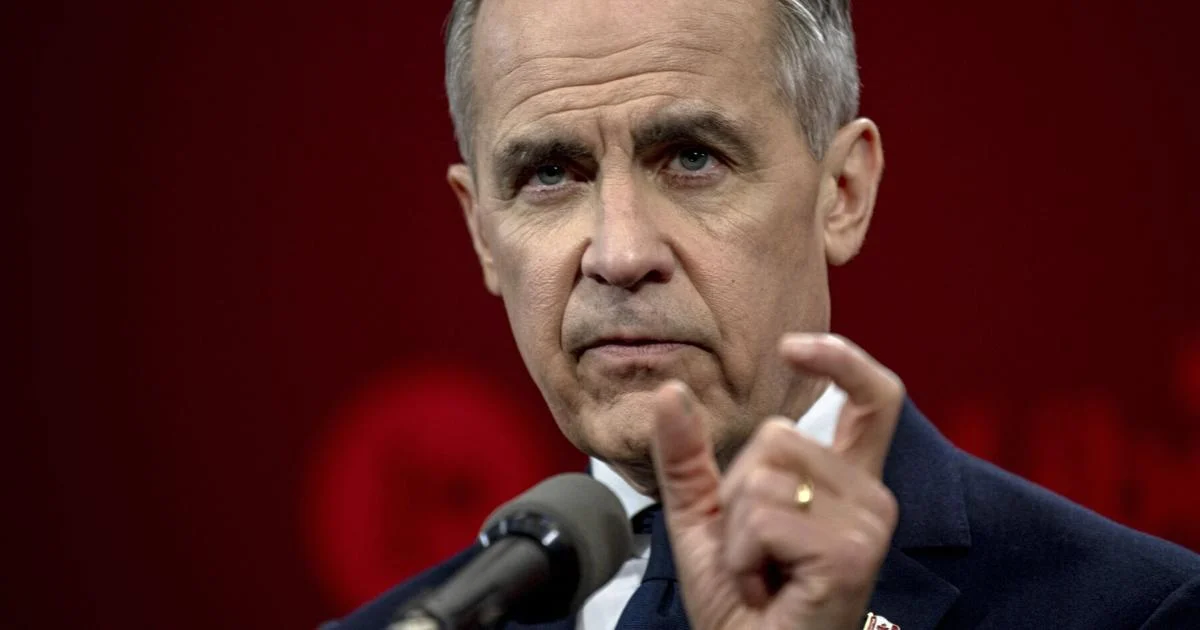 PETITION: Demand Accountability For LAWLESSNESS & CORRUPTION CRISIS — Prime Minister Mark Carney Must Be Investigated For Public Betrayal
Whaddaya Say?