
Norway’s Government Pension Fund Global (GPFG), the world’s largest sovereign wealth fund, has placed Toronto-Dominion Bank (TD) under a four-year observation period following a money laundering scandal linked to the Canadian lender.
TD Bank faces Intense Scrutiny as Norway Oil Fund Observes $3 Billion Financial Crime Risk
Norway Wealth Fund Puts TD Under Four-Year Observation After Scandal
Key Details:
-
Reason for Observation: The decision stems from TD’s involvement in a U.S. probe into anti-money laundering (AML) failures, where the bank allegedly failed to detect and report suspicious transactions tied to drug trafficking.
-
GPFG’s Stance: The fund, which manages over $1.6 trillion, holds TD shares and enforces strict ethical guidelines. While it hasn’t divested yet, the observation period signals heightened scrutiny.
-
Potential Consequences: If TD fails to address compliance issues, the fund could exclude it from investments, following past exclusions of companies over ethical breaches (e.g., Walmart over labor rights, Airbus over corruption).
Norway’s $1.9 trillion sovereign wealth fund has placed Toronto Dominion Bank under observation for four years, citing sustained risks related to serious financial crime. The decision, disclosed late Wednesday, reflects a recommendation by the fund’s independent ethics council and underscores the rising scrutiny facing global banking institutions.
TD Bank last year pleaded guilty to failures in the prevention of money laundering, agreeing to pay almost $3.1 billion in fines and other penalties. US Prosecutors said the bank failed for a decade to root out suspicious activities as required under the Bank Secrecy Act.
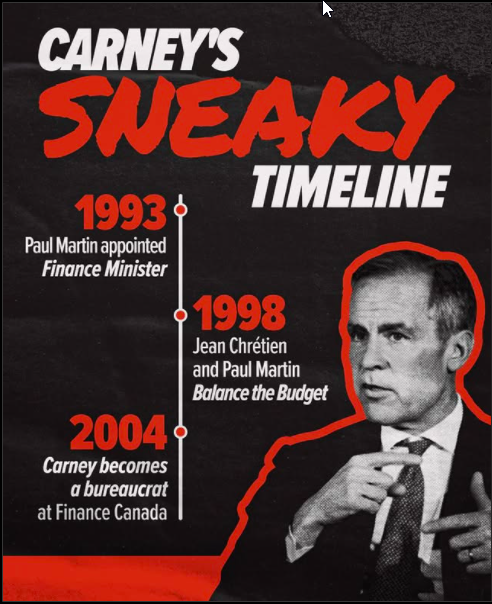
Mark Carney renders Canadian Banking as a Big Suspect

Norges Bank Investment Management’s decisions is based on a recommendation by the Council on Ethics in March
The Government Pension Fund Global, managed by Norges Bank Investment Management, said the council’s recommendation found “an unacceptable risk that the company contributes to or is responsible for gross corruption or other serious financial crime.” The move follows TD’s $3.09 billion fine and guilty plea last year over anti-money-laundering failures in the U.S., adding to previous compliance issues dating back over a decade.
“The council’s investigations have found that TD may be linked to multiple cases of financial crime the past 10–15 years,” the council said in its statement. It also referenced a 2013 penalty relating to the bank’s earlier failure to meet U.S. anti-money-laundering laws.
“TD has made sweeping changes to its management in recent times and has adopted an ambitious plan for improvements,” the advisory body wrote in its recommendation. Still, “the extent to which these plans will be realized within the indicated time period remains uncertain, especially in light of the significant amount of work that remains to be done to create a good compliance culture within the company.”
The decision places TD Bank among a small group of companies under formal observation by the fund, which holds a 1.05% stake in the Canadian lender as of year-end 2024. Under the fund’s ethical guidelines, companies can be excluded or placed under watch for violations including corruption, environmental damage, and human rights abuses.
Based on the recommendations of the council, NBIM can exclude companies from the fund or place them under observation if it’s deemed there’s an unacceptable risk related to corruption or other serious financial crimes — so called conduct-based exclusions.
Observation status allows the fund to monitor the company’s conduct while maintaining its investment, leaving open the possibility for future divestment based on the evolution of compliance efforts. The ethics council’s next review will assess how effectively TD enacts its reforms and mitigates the risk of financial wrongdoing.
The wealth fund, which has equity stakes in more than 8,600 companies, made 10 conduct-based exclusions last year and it currently has nine companies under observation.
NBIM’s 1.08% stake in TD makes it the bank’s 13th largest investor.

TD’s Response:
-
The bank has pledged to strengthen AML controls and is working with regulators to resolve the issue.
-
TD has already set aside over $1 billion for potential fines and invested heavily in compliance upgrades.
Why It Matters:
-
Reputation Risk: Being monitored by GPFG could affect TD’s standing with other ESG-focused investors.
-
Regulatory Pressure: The U.S. Justice Department and FinCEN are still investigating, meaning further penalties could follow.
This move highlights GPFG’s zero-tolerance approach to governance failures, even for major financial institutions. TD now faces a critical period to restore trust or risk long-term exclusion from one of the world’s most influential funds.
Related:-
TD Bank Agrees to Pay $1.2 Billion to Settle Ponzi Scheme Case
The Canadian lender settled claims arising from a scandal involving Stanford Financial, which collapsed in 2009 and cost ordinary investors some $7 billion.
TD Bank, one of Canada’s biggest lenders, said Monday that it had agreed to pay $1.2 billion to settle claims arising from a giant Ponzi scheme involving Stanford Financial, a scandal that erupted 14 years ago and cost ordinary investors some $7 billion.
The bank said it had reached the settlement with the Stanford Financial receiver, who is trying to recoup funds for investors, “to avoid the distraction and uncertainty” of protracted litigation. In a statement, TD, as Toronto-Dominion Bank is known, said it denied any wrongdoing or liability for having provided banking services to Stanford’s offshore bank in Antigua.
The deal with TD was larger than settlements reached with four other banks: Trustmark National, Société Générale, HSBC and Independent Bank, formerly Bank of Houston, according to the Stanford Financial receiver.
In all, the deals with the five banks, which provided services to Stanford Financial during its two decades in operation, totaled $1.6 billion. The receiver had been preparing to go to trial with some of the banks.
The settlement is a major victory for the court-appointed receiver, Ralph Janvey, who has struggled for years to recover money for the 18,000 customers who invested in high-yielding certificates of deposit issued by Stanford Financial’s offshore bank. The C.D.s ended up largely worthless because the bank did not have enough assets to back them up, and the deposits were not guaranteed by any federal bank insurance program.
Before the settlement with the banks, Mr. Janvey and lawyers from Baker Botts had recovered $1.1 billion, with $680 million going to customers and investors.
Go Woke, Go Broke?


 Canadian Real Estate Prices Fall To Lowest Level In 4 Years: May home sales down 4.3 per cent from year ago, but activity up month-over-month… Is this the start of a severe Economic Downtown?
Whaddaya Say?